Smarter Hearing Starts Here: How AI Hearing Aids Can Adapt to You in Real Time

Understanding AI Hearing Aid Technology
What Are AI Hearing Aids, and How Do They Work?
Artificial intelligence, or AI, refers to technology that can analyze information, recognize patterns and use those patterns to perform specific tasks.
In hearing aids, AI and machine-learning technologies may be used to analyse surrounding sounds and apply sound-processing features designed to improve the listening experience.
Not all hearing aids marketed as using AI work in the same way. The available features and their performance vary by manufacturer, device and level of technology.
How Does the Technology in AI Hearing Aids Work?
AI algorithms are step-by-step mathematical instructions that analyze sound and identify patterns, such as speech and competing background noise. Some hearing aids use deep neural networks, or DNNs, that have been trained using large datasets of different sounds and listening environments.²
These systems can process sound in real time and apply features that enhance important sounds, such as speech, while reducing competing noise.² Research has also found that hearing aids with DNN-based noise reduction may provide more consistent sound satisfaction across different levels of background noise than devices using traditional statistical noise-reduction systems.³
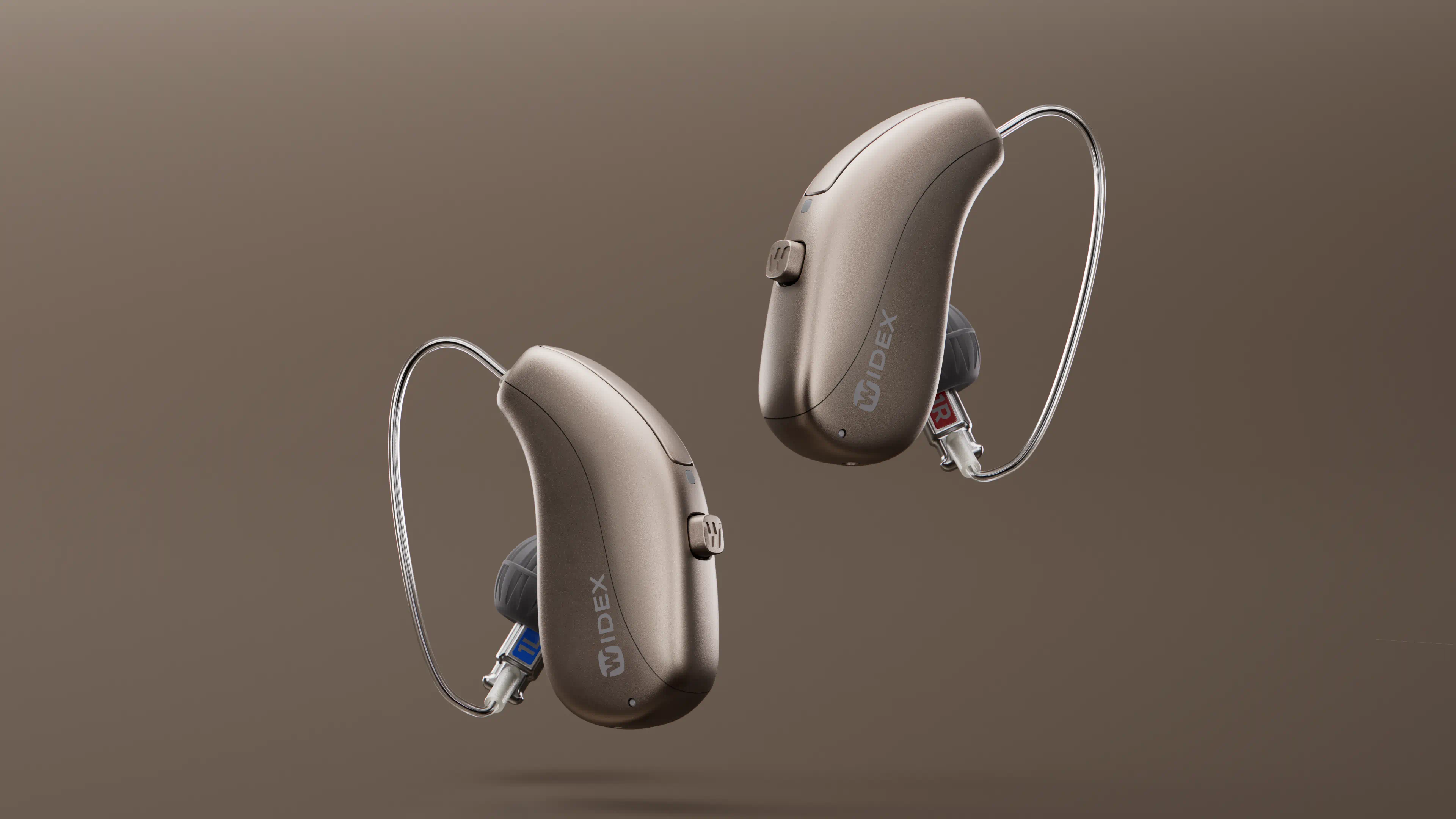
How Do AI Hearing Aids Differ From Traditional Hearing Aids?
Some use machine learning or DNNs to recognize more complex sound patterns, personalize settings or apply additional processing in challenging listening environments.²
Deep Neural Networks (DNN) in Action
Training
A DNN is trained using a large collection of sound samples that may include speech, music and different types of environmental noise.Recognition
By learning patterns within these sounds, the system can distinguish between certain types of speech and competing noise.Real-time processing
The hearing aid can then apply the appropriate sound-processing features as the listening environment changes. For example, when you move from a quiet room into a busy restaurant, a compatible hearing aid may classify the new environment and automatically apply directional microphone and noise-management features.
In one study of 20 adults with sensorineural hearing loss, a specific DNN-based hearing-aid feature improved performance on several speech-in-noise tests. Participants also reported improvements in speech understanding and listening effort when using the feature. However, not every test showed an improvement, and the amount of benefit varied among participants.⁴

AI That Adapts to Your Hearing
Personalized AI: How Smart Hearing Aids Learn From You
Some AI-enabled hearing aids can use information about a wearer’s preferences to personalize amplification.
For example, when a wearer adjusts the volume or sound balance through a smartphone application, compatible systems may use that input to help recommend or apply preferred settings in similar listening environments. The way these features work varies by device.⁵
Hearing Aid Data
User Input
Professional Adjustments
AI Hearing Aids vs Regular Hearing Aids
Are AI Hearing Aids Better Than Traditional Models?
AI hearing aids are not automatically the best choice for every person.
Their main advantage is the ability to provide more automated or personalized sound processing, which may be particularly helpful for people who regularly move between different listening environments or have difficulty understanding speech in background noise.
The benefit of any hearing aid depends on several factors, including:
· The type and degree of hearing loss
· The listening environments the wearer encounters
· The hearing aid’s features and fitting · Individual preferences and communication needs
· Consistent use and follow-up care Research on individual DNN-based features is promising, but results from one hearing aid or algorithm should not be assumed to apply to every AI-enabled device.³˒⁴

Potential Benefits of AI Hearing Aids
- Automatic adjustments: Some hearing aids can classify the listening environment and automatically apply different sound-processing features, reducing the need to change programs manually.²
- Improved Speech Understanding in Noise: Certain DNN-based hearing-aid features have been shown to improve speech understanding in complex environments, particularly when several people are speaking at once. The amount of benefit may vary by person and type of background noise.⁴
- Reduced listening effort: Participants in one study reported lower listening effort when using a specific DNN-based feature in everyday listening environments.⁴
- Personalized Settings: Machine-learning systems may use wearer preferences and app-based adjustments to support more individualized amplification settings.⁵
- Smartphone Connectivity: Depending on the model and smartphone, connected hearing aids may provide app-based controls, audio streaming or access to remote hearing care services.⁶˒⁹
- What About Hearing Aids and Memory? Emerging research suggests that hearing-aid use may be associated with improvements in some measures of cognitive performance.
One study of first-time hearing-aid users found average improvements in cognitive performance after two and four months of use, including working-memory improvements among some participants. However, this study examined hearing-aid use generally and did not compare AI hearing aids with traditional hearing aids.⁷
AI technology should therefore not be described as directly improving memory based on the available evidence.
3 Key Benefits of AI Hearing Aids
- 1.
Automation
Compatible hearing aids can respond to changes in the sound environment with fewer manual volume or program adjustments.² - 2.
Advanced Sound Processing
Some DNN-based features can help enhance speech and reduce competing noise in challenging listening situations.⁴ - 3.
Personalization and Connectivity
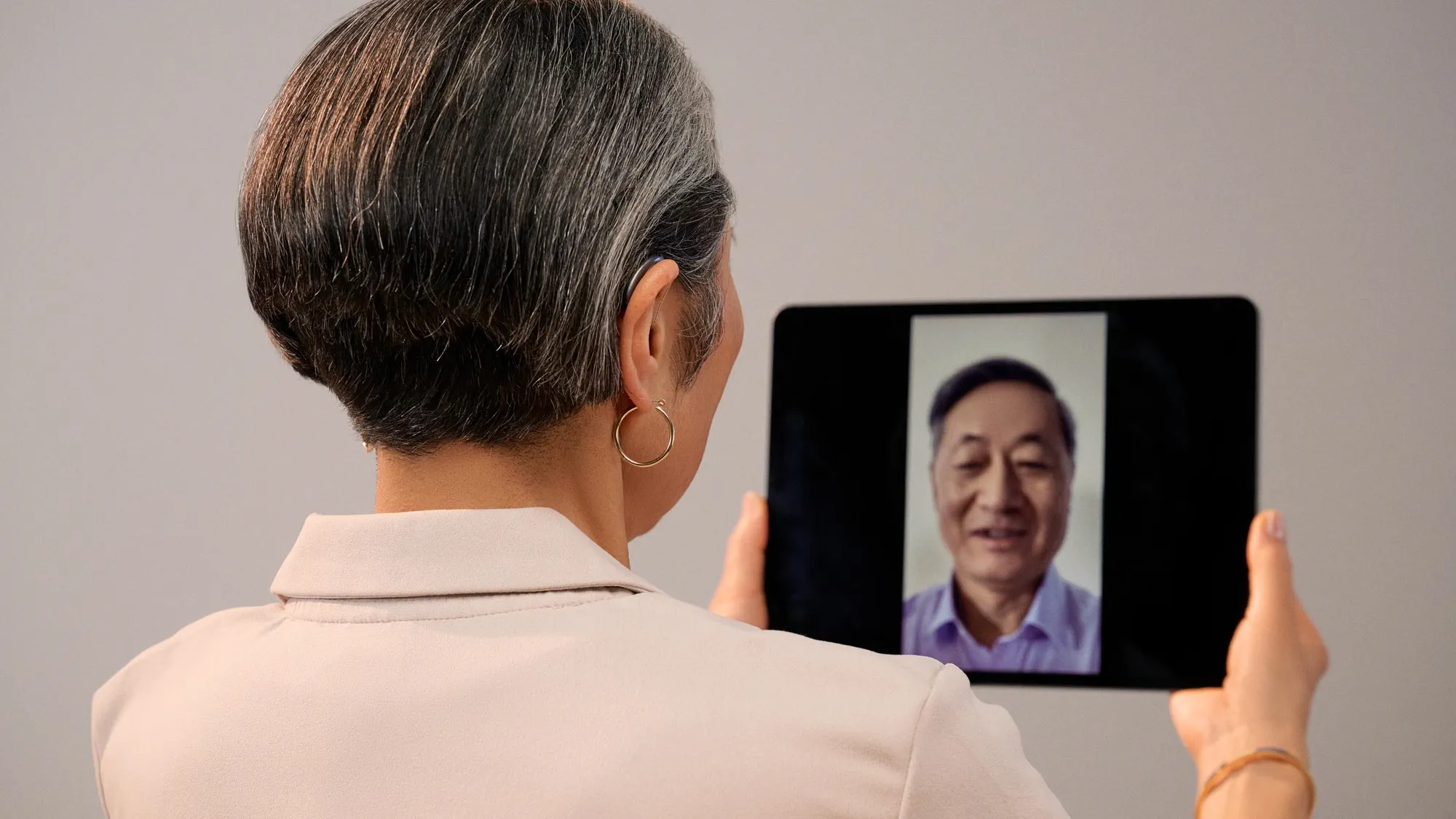
Some devices support preference-based adjustments, smartphone controls and remote professional fine-tuning.⁵˒⁶
AI’s Impact on Hearing Health
The Future of AI in Hearing Care
Research suggests that this data can provide useful insight into how hearing aids are used in everyday life, although smartphone connectivity is not always continuous.⁸ Other systems allow hearing care professionals to send adjusted settings remotely after receiving feedback from the wearer.⁶
As these technologies develop, they may support increasingly personalized sound processing and follow-up care. However, the effectiveness of any feature will continue to depend on the individual, the device and the quality of the hearing-aid fitting.

Experience Smarter Hearing Technology
A conversation with a hearing care professional at your nearest HearCANADA centre is the perfect next step.
Sources:
1. National Institute on Deafness and Other Communication Disorders. (2022). Hearing aids: Styles, types and how they work.
https://www.nidcd.nih.gov/health/hearing-aids
2. Andersen, A. H., Santurette, S., Pedersen, M. S., Alickovic, E., Fiedler, L., Jensen, J., & Behrens, T. (2021). Creating clarity in noisy environments by using deep learning in hearing aids. Seminars in Hearing, 42(3), 260–281.
https://doi.org/10.1055/s-0041-1735134
3. Christensen, J. H., Whiston, H., Lough, M., Gil-Carvajal, J. C., Rumley, J., & Saunders, G. H. (2024). Evaluating real-world benefits of hearing aids with deep neural network–based noise reduction: An ecological momentary assessment study. American Journal of Audiology, 33(1), 242–253.
https://doi.org/10.1044/2023_AJA-23-00149
4. Fitzgerald, M. B., Athreya, V. M., Srour, M., et al. (2025). Effectiveness of deep neural networks in hearing aids for improving signal-to-noise ratio, speech recognition, and listener preference in background noise. Frontiers in Audiology and Otology, 3, 1677482.
https://doi.org/10.3389/fauot.2025.1677482
5. Tasnim, N. Z., Ni, A., Lobarinas, E., & Kehtarnavaz, N. (2024). A review of machine learning approaches for the personalization of amplification in hearing aids. Sensors, 24(5), 1546.
https://doi.org/10.3390/s24051546
6. Convery, E., Keidser, G., McLelland, M., & Groth, J. (2020). A smartphone app to facilitate remote patient-provider communication in hearing health care: Usability and effect on hearing aid outcomes. Telemedicine and e-Health, 26(6), 798–804.
https://doi.org/10.1089/tmj.2019.0109
7. Schafer, E. C., et al. (2025). Impact of short-term hearing aid use on cognitive performance, noise acceptance, and self-perceived benefit. American Journal of Audiology.
https://doi.org/10.1044/2025_AJA-25-00039
8. Christensen, J. H., Saunders, G. H., Havtorn, L., & Pontoppidan, N. H. (2021). Real-world hearing aid usage patterns and smartphone connectivity. Frontiers in Digital Health, 3, 722186.
https://doi.org/10.3389/fdgth.2021.722186
9. American Speech-Language-Hearing Association. (2021). Making the most of your new hearing aids.
https://www.asha.org/siteassets/ais/ais-making-the-most-of-your-new-hearing-aids.pdf


.png?rev=fcbf6c875b0f46168b5531ee533cd910&extension=webp&hash=CC49511DCBE59FA76788E76A4A89761F)